

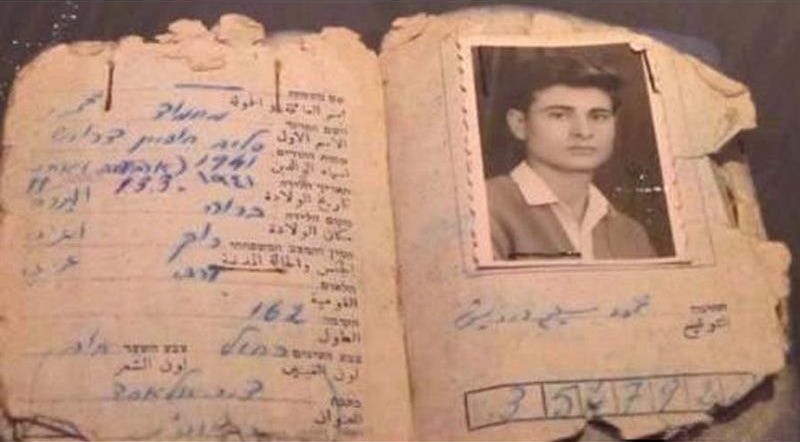
Mahmoud Darwish, regarded as Palestine’s national poet, was born at Al-Birwa, Galilee, a village on a hill six miles east of Acre (‘Akká in Arabic). At age six, Mahmoud and his family were driven out of Al-Birwa by Zionist forces. It was the strategy of the Zionist forces under David Ben-Gurion to drive as many Palestinians off the land as was practicable. The promise of a Zionist state, if it was to be a democracy, depended upon ethnic cleansing.
A year after fleeing their home, Mahmoud and his grandfather snuck back into occupied Palestine, only to find that their village had been razed to the ground and replaced by a settlement and a kibbutz. Mahmoud and his grandfather were illegals, characterized as infiltrators (מסתננים). They settled in a village not far from the ruins of Al-Birwa. Mahmoud’s grandfather taught Mahmoud how to read and write. When he was in Acre, he would purchase books for Mahmoud. The boy attended school illegally, and would be hidden away whenever authorities came to look for infiltrators.
In 1960, just out of high school, Mahmoud moved to nearby Haifa (Ḥayfā). He joined the Israeli Communist Party and worked in the local Arab press. He lived on Abbas Street, named after the Bahá’í leader Abbas Effendi. Throughout the 1960s, Darwish was harassed, arrested, put under house arrest, and imprisoned by the Israeli security forces. He had to keep his workplace secret to avoid police raids.
Mahmoud’s first sweetheart, one might say the love of his life, was an Israeli Jew named Tamar Ben-Ami, a singer, a dancer, and a fellow Communist who would later become a choreographer. Tamar would get her first public exposure singing in Israeli propaganda films. After high school, Tamar moved to Jerusalem to attend college. Because Darwish was restricted to Haifa by the Israeli government, he was not able to visit Tamar. He wrote her many love letters in Hebrew during their separation.
In 1967, Mahmoud traveled illegally to Jerusalem to recite his poetry before a large audience, featuring his controversial protest poem, Identity Card (1964). The recital was a tremendous hit, Israeli politicians were enraged, and Darwish was imprisoned.
Darwish was imprisoned again in 1969. In 1970, he moved to Moscow to attend university. He dropped out after a year and moved to Cairo where he worked at Al-Ahram newspaper. After two years in Cairo, Darwish was asked by Yasser Arafat to join the Palestinian Liberation Organization (PLO) in Beirut, and so he did, and he lived there until September 1982. During the Israeli invasion of Beirut, Darwish was spirited away to Syria, and he moved from there to Tunis, and then to Cyprus.
While in Beirut, Darwish founded the literary quarterly Al-Karmel, named after Mount Carmel where Darwish had lived from 1960 to 1970. Al-Karmel featured noteworthy writers such as Edward Said.
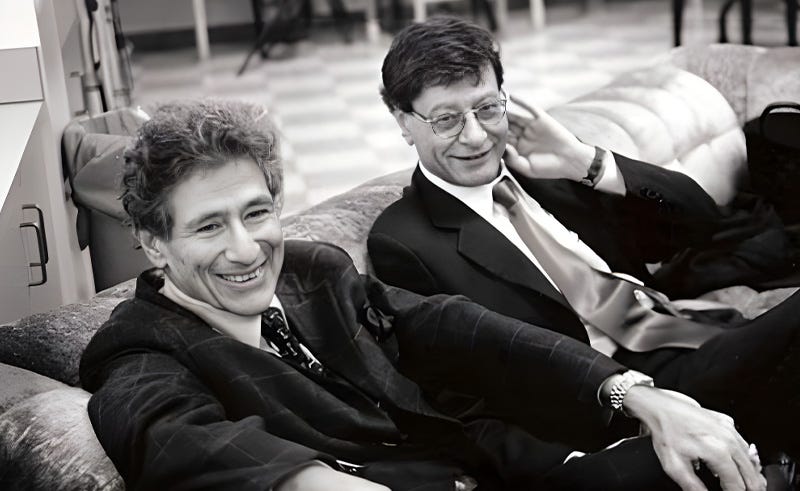
In April 2002, the headquarters of Al-Karmel was destroyed by the IDF. Darwish remained editor of Al-Karmel until his death in 2008.
Fascinating. Thank you