

My religion of birth, the Bahá'í Faith, adopted a Zionist aspect after the Ottoman Empire transported the Bahá'í leader Bahá'u'lláh from Turkey to Palestine.
The Empire also transported Bahá'u'lláh's brother and rival Subh-i-Azal to Cyprus. These twin transportations were performed to separate and thereby pacify the two embattled religious groups. The Bahá'ís would read this act, as they did most other circumstances, as fulfillment of Biblical prophecy. Palestine was after all the “Holy Land” of the Abrahamic religions. Ever since then, the Bahá'ís have regarded the place where Bahá'u'lláh was buried near Haifa, Palestine as the most holy place on earth.
This did not need to lead to Bahá'í Zionism. The Bahá'í leader had found himself in Palestine, and that he declared to be fulfillment of prophecy, but there was nothing in his religion about founding a Jewish state in Palestine, except of course that the book that he had “fulfilled” prophecies from was a Jewish book, a book that spoke of a Jewish return to Palestine. But that was no concern of his.
During the First World War, British forces captured Jerusalem. Soon thereafter, the British issued the Balfour Declaration, a major milepost in the history of Zionism. A couple years after the war, the British governor honored the Bahá’í leader, Bahá'u'lláh’s son ‘Abdu’l-Bahá, with the knighthood. This appears to have been well-deserved, as ‘Abdu’l-Bahá had organized humanitarian efforts during the war.
‘Abdu’l-Bahá’s grandson and successor, Shoghi Rabbani, matriculated at Oxford University in 1920, the same year ‘Abdu’l-Bahá was knighted. ‘Abdu’l-Bahá died a year later, and his grandson, known to Bahá'ís as Shoghi Effendi, would have to terminate his studies after a year at Oxford. Shoghi Effendi was now the leader of the Bahá'ís.
Jewish settlements increased in Palestine, encouraged by the Balfour Declaration and support by British and American governments and investors. The creation of a Jewish State in 1948 made it clear that the Bahá'ís in ‘Akká would be living under Israeli rule. The Bahá'í leadership responded to this development with characteristic obedience. The Bahá’í Faith describes itself as an apolitical organization, and it advises its members to be obedient to their respective governments (though Bahá’ís are encouraged to speak out against persecution of Bahá’ís in Iran). Again, this in itself did not mean that Bahá'ís would become Zionists, but it did establish a connection between the Bahá’í leadership and holy places and the Zionist state, and it has since become difficult for many Bahá'ís to draw a line between the two. Unfortunately, many Muslims in Iran have had similar difficulty distinguishing between the two.
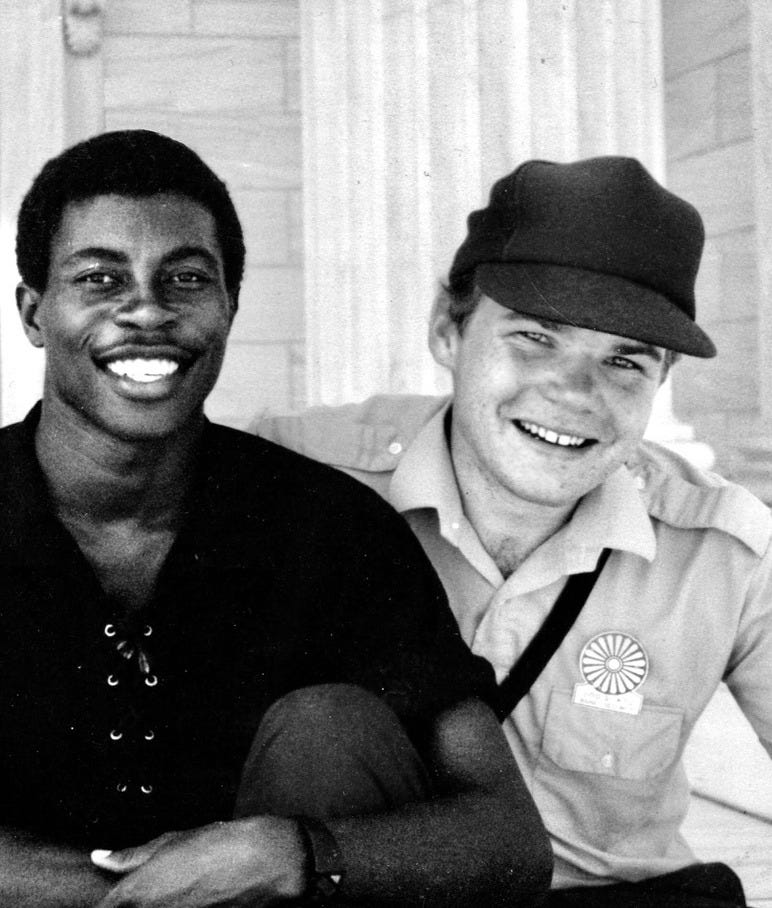
I was raised in a Zionist Bahá'í family. The triumph of the Bahá'í Faith and the triumph of Israel were tied together by prophecy, destiny, and Divine Will. When I went to Israel to serve my religion at age 20, I delighted in the achievements of Israel. The exotic ornamentals and vast lawns of the Bahá'í gardens were in tune with Israeli removal of native vegetation and plantings of exotic pine forests. I knew little to nothing of the displacement, imprisonment, and murder of indigenous Palestinians. Sure enough, I’d heard about Palestinian terrorists, but they were just wrong, out of touch with prophecy. I knew that the United States supported Israel with money and armaments, but that was in line with the Divine Will. F-15’s and F-16’s for Israel meant security for the Bahá’í World Centre in Haifa. With the 1979 revolution in Iran, Bahá’ís felt even more threatened by Muslim elements, and we became even more closely tied to the idea of Israel. Bahá’í prophecies of imminent world calamity only intensified the vision of Israel as a stronghold for the Bahá’í administration. Clearly whatever had to be done to deal with the Palestinian problem would just have to be done. The Bahá’ís were apolitical: they could have no say in the matter. Their hands were clean.
Well, I wouldn’t want to imply that Bahá’í hands are bloody, say, due to a crime of omission, but there are Bahá’ís with ties to other entities that ought to pause to reflect: American Bahá’ís, for instance. American hands are quite bloody indeed. They are now bloodied with the murder of fifteen thousand Palestinian children, just within the last year. An American Bahá’í should reflect: “as I continue to fund (and arm) the annihilation of a people, how is it that I am encouraged by my Bahá’í leaders in Israel to speak out against the persecution of Bahá’ís in Iran and yet maintain a steadfast silence about the mass-murder and ethnic cleansing of indigenous Palestinians?
“… Am I, a believer in the oneness of humanity, to speak out only against crimes committed against my own religious tribe?”
..."a sea for the thirsty, a haven for the distressed, an upholder and defender of the victim of oppression” (Gleanings from the Writings of Bahá‘u’lláh, www.bahai.org/r/174232426). That is what Bahá‘u’lláh urges us to be. The horror in Gaza demands a response. What does “an upholder and defender” look like? All issues that face us in our interknit world are multipolar, complex. What seems a solution may lead to even worse externalities. Yet this cannot mean that we allow ourselves to succumb to the malaise with which our society is deeply afflicted, with which I am also afflicted. For my own miniscule part--and thank you for yours--I've decided not to own stocks, much of which goes to military. Not that I had more than some months worth of retirement anyway, and not that it will make a difference to what happens in Gaza. But it will make a difference to me. The garden might prove a better investment anyway.