

Looking at the the hymns (Gathas) of Zarathuštra, one easily finds reverence for a sacred fire which is directly linked to truth:
… Thy fire, Lord, which possesses strength through truth … (Yasna 34:4)
… through the heat of thy truth-strong fire … (Yasna 43:4)
It should come as no surprise that Truth, namely Aša, is symbolized by a sacred fire, and it is not because fire provides light, for the heat of fire is what is responsible for revealing the truth of things, as the constituents of ore are revealed in the heat of fire. Light per se is not much of a factor in the hymns of Zarathuštra. It is by the heat of the sacred fire of truth that men will be judged, just as fire tests iron.
Zarathuštra’s metaphors, not that these are necessarily mere metaphors, make it clear that he was a man of the iron age.1 Still, he did also associate truth and good thinking with the sun, so fire was not his only luminary of truth.2
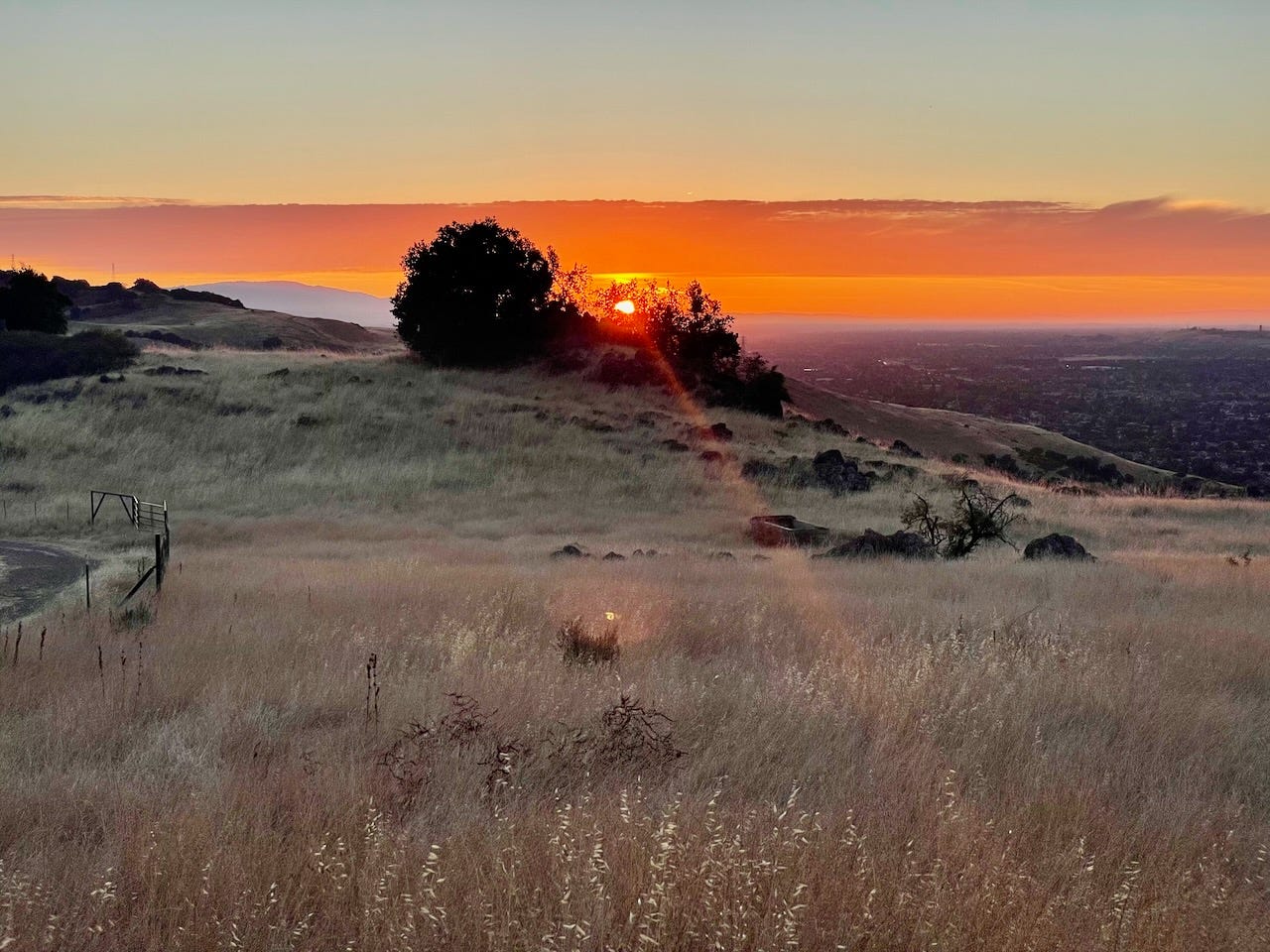
In later Zoroastrian books (ca. 900–400 BCE), the role of the sun in the struggle of good against evil became more explicit:
And when the sun rises up, then the earth, made by Ahura, becomes clean; the running waters become clean, the waters of the wells become clean, the waters of the sea become clean, the standing waters become clean; all the holy creatures, the creatures of the Good Spirit, become clean.
Should not the sun rise up, then the Daevas would destroy all the things that are in the seven Karshvares, nor would the heavenly Yazatas find any way of withstanding or repelling them in the material world.
Khórshéd Yašt (Yašt 6:2–3)
Thus it appears that Zoroastrian thought involved light more with time.
A major god of the Indo-Iranian pantheon was Mithra, a god of contracts, trustworthiness, and light; an all-seeing, all-hearing god from whom sprung piercing rays of light capable of probing men’s hearts.3
We sacrifice unto Mithra, the lord of wide pastures, sleepless, and ever awake; Who first of the heavenly gods reaches over the Hara (Alborz) before the undying, swift-horsed sun; who, foremost in a golden array, takes hold of the beautiful summits, ...
— Mihir Yašt (Yašt 10:12–14)4
Mithra, like the Persian god Anahita, did not have a place in early Zoroastrianism. It may be that as an Indo-Iranian god (daeva) he was excluded by Zarathuštra, but Mithra has since taken root in Zarathuštra’s religion to such an extent that a common term for a fire temple is a “gate of Mithra” (dar be-Mehr). As a god of light and truth he is something of a judge of men, not conceptually unrelated to the Zoroastrian entity Aša. Where Aša represents truth and order, Mithra represents trustworthiness and justice, reasonably compatible with the teachings of Zarathuštra.
With help from Mithra and the sun, Zarathuštra’s fire was easily generalized to light. Chroniclers of the early centuries of the Islamic conquest of Iran observed that many Iranians believed that God is light.5 Though these proto-illuminationists claimed to be Muslims at least to outsiders, their beliefs and practices were denounced as Zoroastrian and Magian.6
Once one equates the Creator of the universe with light, certain doctrines follow, it seems, almost inevitably. For instance, light is somewhat ubiquitous, so it must follow that divine manifestation is at least somewhat ubiquitous. The divine is thus taken to be immanent in the world:7
Ohrmazd created the body of his creation in the form of fire, bright, white, round,
and seen from afar, from his own selfhood, from the substance of light.— Greater Bundahišn 1:44
Because Iranians were dualists, divinity was for them not so much about power as it was about goodness. As they equated that divine goodness with light, hence light was not merely regarded as creative but primarily virtuous and benevolent. It should come as no surprise, then, that some Iranian poets such as Al-Hallaj and Rumi would come to see God in beauty and even identify God with beauty.8
The Western eye may doubt any inherent kinship between goodness and beauty, for it seems a heresy to the celibate Christian mind to permit ethics and aesthetics to so much as overlap, but when light is regarded in its purest form to be divine and good, the mystical eye is naturally inclined to intuit beauty to be a sign of the divine, or even to be divinity itself.
The beauty of things means virtue and value in them.
Is it in the beholder’s eye, not the world? Certainly.
It is the human mind’s translation of the transhuman
Intrinsic glory. …Robinson Jeffers, De Rerum Virtute
Such characteristics of Iranian thought have been cited as contributions to Islamic philosophy and mysticism. I was a rather studious Bahá’í until age 23, and I have occasionally studied that religion in the 36 years since. I still think in terms of annihilation of self (فناء). I retain enough enthusiasm for Islamic mysticism to have purchased and read Henry Corbin’s Spiritual Body and Celestial Earth, which I happened to find inadequate for lack of source references and reasoning. I do not doubt that Zoroastrianism has exerted a profound influence on Shi‘a and Ṣúfí philosophy, and I do not doubt that such developments have enriched Islamic thought a great deal, however I am inclined to see these developments as hybridizations that lack something of the core vitality of Zoroastrianism. Illuminationism (حكمت اشراق) may be attractive as metaphysics, but the Zoroastrian view toward a divine and benevolent light that did not carry with it all the legalism and monotheism of Islam was no abstract metaphysics: it was simply how many Iranians encountered and worshipped their world.
The Iron Age appears to have been in full force in Transoxiana by the 10th Century BCE. See A. Askarov, The Beginning of the Iron Age in Transoxiana, History of Civilizations of Central Asia, v. 1: The Dawn of civilization, earliest times to 700 B.C. (UNESCO, 1992)
Yasna 32:2 & 53:4
Yašt 23:6
The Zend-Avesta, Part II. Translated by James Darmesteter. Sacred Books of the East, Ed. F. Max Muller, Vol. XXIII (Oxford, 1883).
This was not the case for the Sasanian priesthood who were committed to institution of dynastic fire temples.
Crone, Patricia. The Nativist Prophets of Early Islamic Iran: Rural Revolt and Local Zoroastrianism (Cambridge, 2012), pp. 193, 320, 370
Crone, pp. 324, 454. Cf. https://www.avesta.org/mp/grb1.htm#chap1
Crone, pp. 467–9
Perhaps you are a teacher of the value, the beauty, the truth of what is outwardly fire, inwardly light. You quote: "And when the sun rises up, then the earth, made by Ahura, becomes clean..." I have often thought how nothing on earth has existence except that it comes from the fire of the sun(s)--the water, the soil, the wind, the life--it's all from sun. Later in the same passage, I note this expression of the sacredness of all things: "all the holy creatures, the creatures of the Good Spirit, become clean." Goodness equals beauty. "Beauty is in the eye of the beholder." Perhaps this does not mean just that different people see things differently, but also that the cleansed eye--cleansed as by the fire and light of the sun--beautifies all within its sight.